Tile vs Acrylic Shower in Tampa
Tile vs acrylic shower: the full 2026 cost and durability comparison, so you can pick the right walls for your Tampa bathroom.
Updated November 2026 · Tampa Bath Remodel
When Tampa homeowners plan a new shower, the tile vs acrylic shower choice is usually the first big decision, and it sets both the price and the daily upkeep for years. Tile means individual pieces set by hand over a waterproof base, with grout lines between them. Acrylic means factory-made panels fitted over the walls, with almost no seams. Both can look good on day one. The difference shows up in what you pay, how long it lasts, and how much cleaning it asks of you. This guide compares both options with 2026 installed prices, so you can pick the right walls for your Tampa bathroom.
Tile vs Acrylic Shower: The Short Answer
Acrylic costs less and installs faster. A typical acrylic surround runs $1,500 to $4,000 installed and lasts 10 to 15 years. Tile costs more upfront, with a typical tiled shower running $3,500 to $7,000 installed, but it lasts 20 years or more and looks like a custom remodel.
Pick acrylic for a rental, a guest bath, or a home you plan to sell soon. Pick tile for a master bath or any home you plan to keep for a decade or more. The rest of this guide shows the numbers behind that short answer, plus the Tampa humidity angle that most national guides skip.
What Each Option Costs in 2026
Installed prices vary because quotes cover different scopes. A materials-only price for an acrylic wall set is not the same as a full installed job with demolition, a new pan, waterproofing, fixtures, and glass. The ranges below are full installed jobs for a standard three-wall shower, from 2026 cost data, unless stated otherwise.
- Acrylic surround, installed ($1,500 to $4,000): the wall panels, a shower base, demolition of the old surround, and labor. Michigan Home Calcs put a standard acrylic surround at $1,500 to $4,000 installed in October 2026. Angi lists the acrylic insert itself at $500 to $2,000 before labor, updated 30 October 2026. If you searched for acrylic shower cost on its own, $1,500 to $4,000 installed is the number to hold onto for a standard surround.
- Tile shower, installed ($3,500 to $7,000): demolition, a new pan, cement board and waterproof membrane, tile and grout, fixtures, and labor. Michigan Home Calcs put a standard tiled shower at $3,500 to $7,000 installed in October 2026. Angi lists tile material at $2 to $17 per square foot and tile installation at $3 to $15 per square foot, updated 30 October 2026.
- High-end tile ($8,000 to $15,000 and up): large-format porcelain, natural stone, niches, benches, and frameless glass push a tiled shower well above the standard range. Trade guides published in 2026 put a full three-wall tile job at $9,500 to $18,000 in some markets, so always compare quotes line by line instead of by one headline number.
- The whole shower job ($6,000 to $12,000): Angi puts the national average walk-in shower installation at $9,000 in 2026, with most jobs running $6,000 to $12,000. Prefab kits run $700 to $3,000 and custom showers $4,200 to $8,500, updated 30 October 2026. That range covers the full job, not just the walls, which is why it sits above the wall-only figures.
Why do the ranges overlap so much? A simple acrylic job and a high-end tile job are different projects with different scopes, and a cheap quote often leaves out the pan, the waterproofing, or the glass. The honest way to compare quotes is line by line: demolition, pan, waterproofing, walls, fixtures, glass. Our Tampa bathroom remodel cost guide puts shower prices in the context of a full remodel, and our shower remodel page shows what a proper shower job covers from demo to glass.
Every figure on this page is a typical, estimated range. Ranges are a guide, not the price: the final price is confirmed after seeing the job, in a written quote before work starts.
How Long Each One Lasts
A tiled shower lasts 20 years or more when the waterproofing behind it is done right, and many last 30 to 50 years. An acrylic surround lasts 10 to 15 years, with 8 to 15 years the range most 2026 trade guides quote. Tile wins on lifespan, and that gap is the main reason tile costs more upfront.
What fails first is different on each side. On acrylic, the caulk seams are the weak point. They yellow and separate after 5 to 10 years, and the high-gloss surface picks up small scratches from cleaning over time. A cracked acrylic panel is hard to repair, and a leak at a failed seam can hide behind the panels for months. On tile, the grout is the part that ages. It can stain, crack, and need resealing, but individual tiles can be replaced without tearing out the whole shower. The real failure point for a tile shower is not the tile at all. It is the waterproofing behind it, and a shower built on a proper membrane outlasts its grout many times over. Our guide to mold-resistant bathroom materials for Florida explains what to insist on behind the tile.
Cleaning and Upkeep
Acrylic is the easier surface to clean. It has no grout, so a weekly wipe-down keeps it looking fresh, and it does not stain. Tile needs more care: grout must be sealed, usually once a year, and sealed grout still needs scrubbing. If you hate cleaning, acrylic wins this round, but only if you accept the shorter lifespan.
There are two ways to close the gap. First, epoxy grout stays sealed for good and needs nothing beyond normal shower cleaning, though it costs more to install than standard grout. Second, a daily squeegee habit after each shower keeps both surfaces cleaner for longer, and it matters more than any product. One more Tampa factor: hard water leaves visible deposits on glossy acrylic, while matte porcelain tile hides them. If your water leaves spots on glass, that same water will show on an acrylic surround long before it shows on tile.
Looks and Design Choice
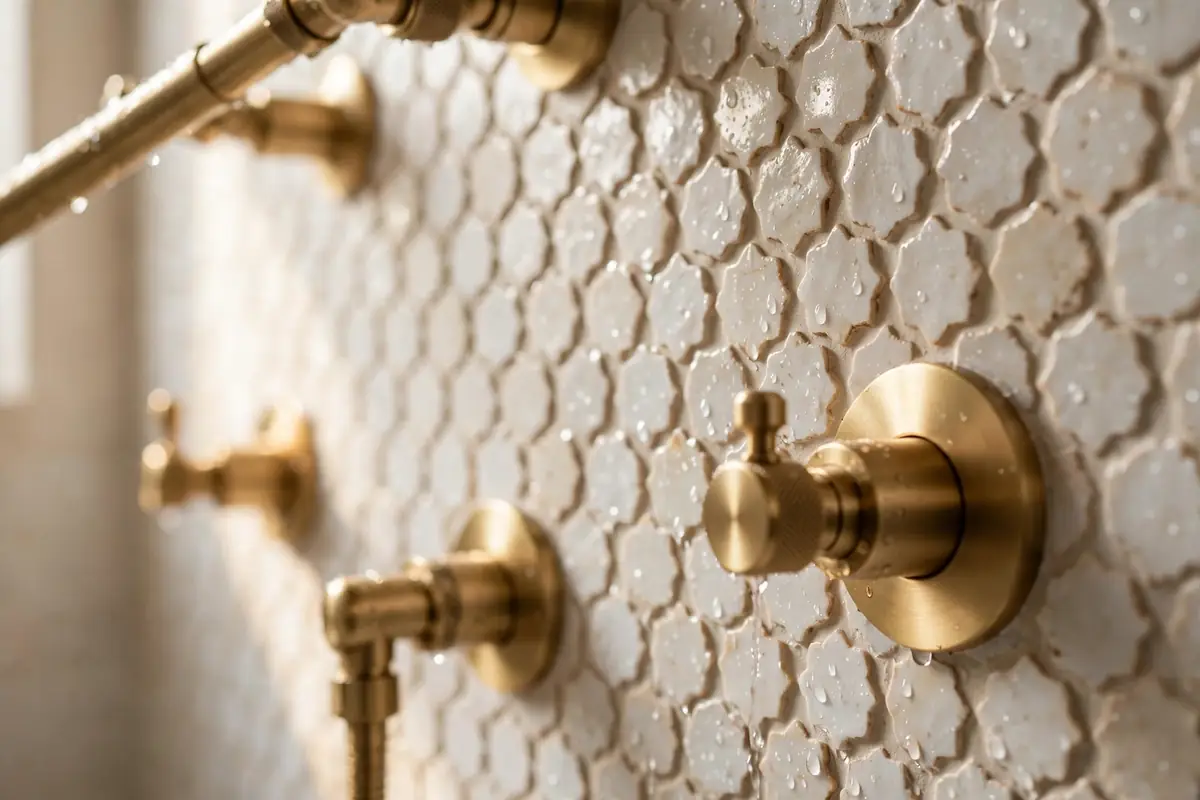
Tile wins on looks, and it is not close. Tile comes in any size, color, and pattern, from small mosaic to large-format slabs with almost no grout lines. You can add a niche for shampoo, a bench for sitting, and a tile floor that runs straight into the shower with no curb. That freedom is why tile reads as custom and why buyers notice it the moment they walk into the bathroom. Our walk-in shower installation page shows what a tiled walk-in shower can look like when the layout is planned around it.
Acrylic looks clean and neat, but it reads as a standard unit. Colors and patterns are limited, the panels have visible seams, and the shape is fixed by the factory mold. That is fine in a guest bath or a rental, where clean and simple is the goal. It is a poor fit for a master bath that should feel like the best room in the house. On resale, buyers treat tile as a remodel and acrylic as a replacement, and that difference shows in what they will pay for the home.
Tampa Humidity and Mold: Which Holds Up Better
In Tampa humidity, the winner is the shower with the better waterproofing, not the prettier surface. Tile over a proper membrane handles steam well, and failed grout can be resealed. Acrylic has no grout for mold, but a failed caulk seam lets water behind the panels unseen. Either way, the exhaust fan matters as much as the wall material.
Tampa remodels often uncover rotted subfloor or moldy drywall behind a leaking shower at demo, and the cause is almost always a failed waterproof layer rather than a failed wall surface. That is why the membrane, the pan, and the fan deserve as much attention as the tile-versus-acrylic choice. A tiled shower with a proper membrane and a humidity-rated fan will outlast an acrylic surround fitted over damp drywall by a decade or more. Our bathroom ventilation guide for Florida humidity explains how to size a fan that actually clears the steam, and our mold-resistant materials guide covers what belongs behind the tile in a Florida home.
Which Should You Choose?
Choose acrylic if the bathroom is a rental, a guest bath used a few times a month, or a home you plan to sell within two years. Choose it too if you need the bathroom back in service in one to three days, or if the budget is the deciding factor and the cheaper job still includes a proper pan and sealed seams. In a small bathroom remodel, acrylic is often the choice that keeps the whole project inside budget.
Choose tile if this is your master bath, if you plan to stay five years or more, or if you want niches, a bench, or a curbless entry that acrylic cannot offer. Choose tile too if resale matters in a higher-value home, where buyers expect a custom shower. If you are converting a tub to a shower at the same time, the wall choice is only one line in the quote, and our tub-to-shower conversion cost guide for Tampa breaks the full job down the same way this guide breaks down the walls.
One last rule covers both options. Never save money by skipping the waterproof membrane, the shower pan, or the ventilation. Those three items are the watertight core of the shower, and a cheaper quote that skips them is not a bargain. It is a future leak repair bill, and in a Florida home, a leak behind tile or behind acrylic panels becomes a mold problem fast.
Frequently Asked Questions
How much does a tile vs acrylic shower cost in Tampa?
A tile vs acrylic shower in Tampa runs about $1,500 to $4,000 installed for a standard acrylic surround and about $3,500 to $7,000 installed for a standard tiled shower, based on 2026 cost data from Michigan Home Calcs and Angi. High-end tile work can reach $8,000 to $15,000 or more. Tampa labor sits near the national middle, so local quotes should land inside these ranges when the scope matches.
Which lasts longer, a tile shower or an acrylic shower?
Tile. A tiled shower lasts 20 years or more, and many last 30 to 50 years when the waterproofing behind it is done right. An acrylic surround lasts 10 to 15 years in normal use. The caulk seams on acrylic are the weak point: they yellow and separate after 5 to 10 years, while a tiled shower can be regrouted and resealed instead of replaced.
Is tile or acrylic better for a humid Florida bathroom?
Tile, when it is installed over a proper waterproof membrane, because the assembly can be repaired tile by tile and grout can be resealed. Acrylic has no grout for mold to grip, which is a real plus, but a failed seam hides water behind the panels. Whichever you pick, pair it with a humidity-rated exhaust fan that actually clears the steam.
Does a tile shower add more resale value than acrylic?
Yes, in most cases. Buyers read tile as a custom remodel and acrylic as a standard unit, and that perception shows in what they will pay. The gap matters most in a master bath and in higher-value homes. In a second bath or a home you plan to sell soon, the cheaper acrylic job rarely hurts value, because buyers judge the bathroom as a whole.
How long does it take to install a tile shower vs an acrylic shower?
An acrylic surround takes 1 to 3 working days, since the panels arrive ready to fit. A tiled shower takes 5 to 10 working days, because each tile is set by hand and the grout must cure. A full tub-to-shower conversion with tile runs 3 to 5 days for the whole job, and a rushed tile job that skips waterproofing is the one that leaks later.
If you want a fixed written price for your shower, book a shower remodel estimate and we will measure, check your drain and supply lines, and tell you honestly whether tile or acrylic fits your home better.
Have a project in mind?
We'll visit, measure, and give you a fixed written price.
+1 (813) 535-8769 ☎ Call now